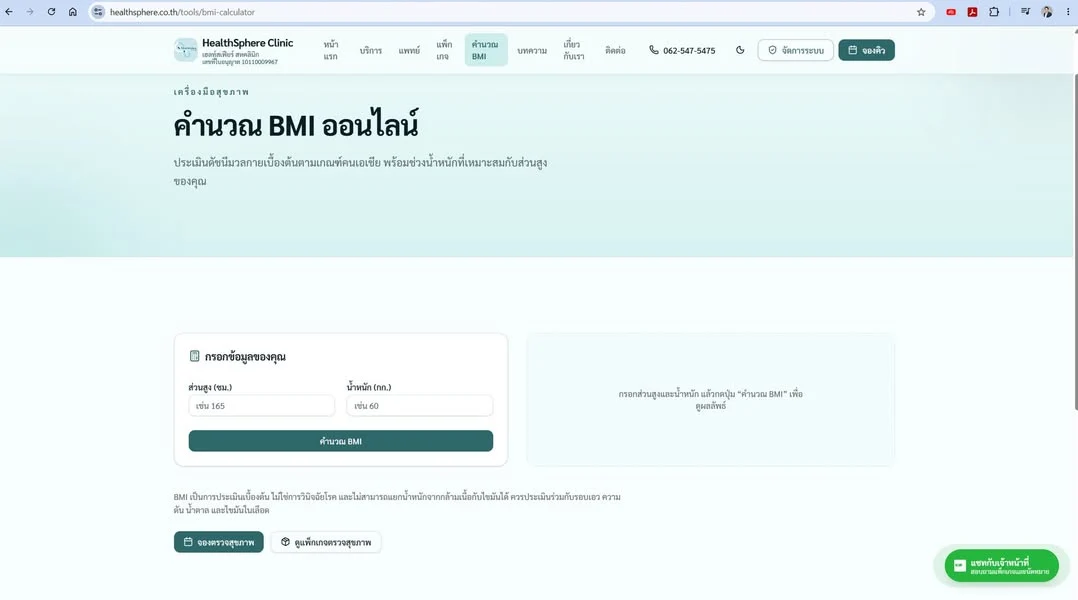
The clinic's BMI post introduces a simple screening measure. Body mass index compares weight with height; it is not a diagnosis or a complete measure of fitness.
Calculate BMI as weight in kilograms divided by height in metres squared. For example, 60 kg at 1.65 m gives a BMI of approximately 22.0. Use measured values and correct units.
BMI does not distinguish fat from muscle or show where fat is stored. A muscular person may have a higher value, while someone with a lower value may still have abdominal fat or other risk factors. Waist size, blood pressure, laboratory results and medical history add context.
Risk thresholds can differ between population-specific guidelines, including those used for Asian populations. Check which standard an online tool applies. Adult cutoffs should not simply be applied to children; pregnancy and fluid-related weight changes need separate assessment.
For weight management, focus on sustainable meals, less sugary drinks, regular movement and suitable sleep. Include function and wellbeing in your goals.
Unexpected weight change or concerning symptoms deserves assessment. Bring previous measurements and medication details. Use BMI to begin a conversation, rather than declaring yourself healthy or unwell from one number.